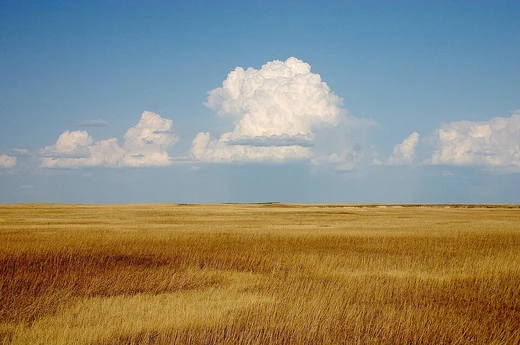
Al-Ahsa Oasis
World's largest oasis, with over 2.5 million palm trees.

Wikipedia / Wikimedia Commons
Al-Ahsa Oasis, also known as al-Ḥasāʾ or Hajar, is an oasis and historical region in eastern Saudi Arabia. With an area of nearly 85.4 km² (33.0 sq mi), it is the largest oasis in the world. The oasis is located about 60 km (37 miles) inland from the coast of the Persian Gulf and comprises four main cities and 22 villages, including Al-Mubarraz and Al-Hofuf. It became a UNESCO World Heritage site in 2018 and has been part of the UNESCO Creative Cities Network since December 2015.
- location
- Eastern Saudi Arabia, about 60 km inland from the Persian Gulf
- area
- 85.4 km² (33.0 sq mi)
- palm_trees
- Over 2.5 million
- artesian_springs
- More than 280
- world_heritage_status
- 2018
- largest_oasis_in_the_world
- True
Verified Timeline
Lore & Background
Al-Ahsa has been inhabited since prehistoric times because of its abundance of water in an otherwise arid region. Natural fresh-water springs have surfaced at oases in the region for millennia, encouraging human habitation and agricultural efforts, especially date palm cultivation. The oasis region and specifically the name Hajar may be related to the Ancient Near East toponym Agarum, mentioned in Dilmunite inscriptions as the original home of their chief deity Inzak, though this interpretation is not without criticism. Eastern Arabia was conquered by the emerging Rashidun Caliphate during the 7th century. In 899 the region came under the control of the Qarmatian leader Abu Tahir al-Jannabi and was declared independent from the Abbasid Caliphate of Baghdad. Its capital was at al-Mu'miniya near modern Hofuf. By circa 1000, Al-Ahsa became the ninth largest city worldwide supporting 100,000 inhabitants. The Qarmatian state of Al-Ahsa was overthrown by the Uyunids in 1077. Al-Ahsa subsequently fell under the rule of the Bahrani dynasty of the Usfurids, followed by their relatives, the Jabrids, who became one of the most formidable powers in the region, retaking the islands of Bahrain from the princes of Hormuz. The last Jabrid ruler of Bahrain was Muqrin ibn Zamil. In 1521, the Portuguese Empire conquered the Awal Islands from the Jabrid ruler Muqrin ibn Zamil. In 1550, Al-Ahsa and nearby Qatif came under the sovereignty of the Ottoman Empire with Sultan Suleiman I. Al-Ahsa was nominally the Eyalet of Lahsa in the Ottoman administrative system. The Ottomans were expelled from Al-Ahsa in 1670, and the region came under the Banu Khalid Emirate. Al-Ahsa, along with Qatif, was incorporated into the Wahhabist Emirate of Diriyah in 1795 but returned to Ottoman control in 1818 with an invasion ordered by Muhammad Ali of Egypt. The Banu Khalid were again installed as rulers but, in 1830 the Emirate of Nejd retook the region. Direct Ottoman rule was restored in 1871. In 1913, ibn Saud, the founder of modern Saudi Arabia, annexed Al-Ahsa and Qatif into his domain of Najd.
Reader's Guide
Al-Ahsa Oasis is the largest oasis in the world, with an area of nearly 85.4 km² (33.0 sq mi). The majority of the oasis is located in the Empty Quarter, also referred to as Rub' al Khali, covering almost three-quarters of the land, while residential areas constitute 18%. There are more than 2.5 million palm trees including date palms in the oasis, which is fed from a huge underground aquifer and irrigated by the flow of more than 280 artesian springs, allowing year-round agriculture in a region that is otherwise sand desert. The oasis became a World Heritage site in 2018 and has also been part of the UNESCO Creative Cities Network since December 2015. According to one author, the oases of Al-Ahsa and Al Ain are the most important in the Persian Gulf region. Al-Ahsa is part of the region known historically for its high skill in tailoring, especially in making bisht, a traditional men's cloak. Al-Ahsa was one of the few areas in the Arabian Peninsula in which rice was grown. In 1938, petroleum deposits were discovered near Dammam, resulting in the rapid modernization of the region. By the early 1960s, oil production levels reached 1 million barrels per day. Today, Al-Ahsa is home to the largest conventional oil field in the world, the Ghawar Field. Al-Ahsa has over 2.5 million palm trees which produce over 100,000 tons of dates every year. The oasis is a popular tourist destination for Qatari nationals, who would make the 160-km cross-border drive to visit local attractions, as well as to find bargains for food, spices and clothing in Al-Ahsa's bazaars. A road between Oman and Saudi Arabia, through the vast Empty Quarter sand desert, was completed in September 2021. Between 700 and 800 kilometres long, it extends from Al-Ahsa to the Omani town of Ibri. 12 locations were defined as the Cultural Landscape of Al-Ahsa Oasis, including Eastern Oasis, Northern Oasis, As-Seef, Suq Al-Qaysariyah, Qasr Khuzam, Qasr Sahood, Qasr Ibrahim, Jawatha archaeological site, Jawatha Mosque, Al-'Oyun village, Ain Qannas archaeological site, and Al-Asfar lake.
Did You Know?
- Al-Ahsa Oasis has more than 2.5 million palm trees, producing over 100,000 tons of dates every year.
- The oasis is fed by more than 280 artesian springs, allowing year-round agriculture in a sand desert.
- By circa 1000, Al-Ahsa became the ninth largest city worldwide, supporting 100,000 inhabitants.
- Al-Ahsa is home to the Ghawar Field, the largest conventional oil field in the world.
- A road between Al-Ahsa and the Omani town of Ibri, through the Empty Quarter, was completed in September 2021.
More in Desert Landscapes 1-18
Spotted an error? Know more?
This is a living reference — every entry is fact-audited, and reader corrections feed straight into our audit queue. Suggest an edit · See this site's audit record