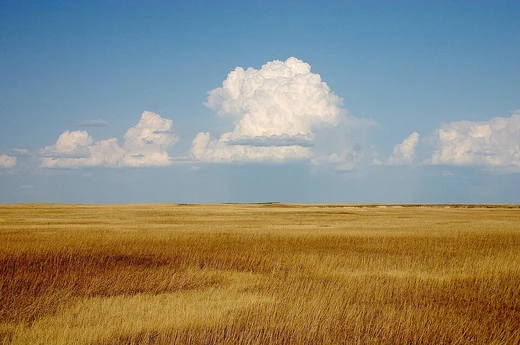
Dakhla Oasis
A naturally rich oasis in Egypt's Western Desert with a long history of habitation and recent archaeological discoveries.

Wikipedia / Wikimedia Commons
Bahariya Oasis (Egyptian Arabic: الواحات البحرية, romanized: El-Wāḥāt El-Baḥrīya, "the Northern Oases") is a depression and a naturally rich oasis in the Western Desert of Egypt. It is approximately 370 km away from Cairo. The roughly oval valley extends from northeast to southwest, has a length of 94 km, a maximum width of 42 km and covers an area of about 2000 km2. The valley is surrounded by mountains and has numerous springs. Located in Giza Governorate, the main economic sectors are agriculture, iron ore mining, and tourism. The main agricultural products are guavas, mangos, dates, and olives.
- location
- Giza Governorate, Egypt
- area
- About 2000 km2
- known_for
- Valley of the Golden Mummies, dinosaur fossils in the Bahariya Formation, and re
- key_sites
- Valley of the Golden Mummies, Qarat Hilwah, 'Ain el-Muftilla, Qārat Qasr Salim,
Verified Timeline
Lore & Background
The depression has been populated since the Neolithic, although archaeological evidence is not continuous. In El Heiz, a prehistoric settlement site of hunter-gatherers was found with remains of grindstones, arrowheads, scrapers, chisels, and ostrich eggshells. In Qārat el-Abyaḍ, a Czech team led by Miroslav Bárta discovered a settlement of the Old Kingdom. Rock inscriptions in el-Harrah and other records date to the Middle Kingdom and upwards. The tomb of Amenhotep called Huy was erected in Qarat Hilwah at the end of the 18th dynasty. In the 26th dynasty, the depression was culturally and economically flourishing, as seen from chapels in 'Ain el-Muftilla, tombs in Qārat Qasr Salim and Qarat esh-Sheikh Subi, and the site of Qasr 'Allam. The Greco-Roman period was a time of prosperity, with a ruin of a temple dedicated to Ammon by Alexander the Great located in Qasr el-Miqisba ('Ain et-Tibniya). Excavations of the Greco-Roman necropolis found in 1995 and known as the Valley of the Golden Mummies began in 1999. Approximately thirty-four tombs have been excavated from this area. In Roman times, a big military fort was erected at Qarat el-Toub. During World War I, the Baharia Military Railway was built to provide access to the oasis. In the early 1970s, an asphalt road connecting Bahariya to Cairo was finished, bringing electricity, cars, television, phone lines, and internet. In the spring of 2010, a Roman-era mummy was unearthed in a Bahariya Oasis cemetery in el-Harrah. In 2019, archaeologists discovered 19 structures and a church carved into the bedrock from the fifth century CE. In 2021, archaeologists discovered a complex with the ruins of three churches and monks cells dating back to the fifth century CE. In August 2026, an Egyptian archaeological mission excavating the Sheikh Sobi necropolis uncovered three tombs representing different funerary traditions, including a Late Period rock-cut communal tomb containing five mummies in limestone coffins, an apparently unused tomb, and a Roman-period communal tomb containing limestone and pottery coffins.
Reader's Guide
Bahariya Oasis offers visitors a chance to explore a depression that has been inhabited since the Neolithic, with archaeological evidence spanning the Old Kingdom, Middle Kingdom, 18th dynasty, 26th dynasty, Greco-Roman period, and Coptic era. Key sites include the tomb of Amenhotep called Huy at Qarat Hilwah, the chapels at 'Ain el-Muftilla, the tombs at Qārat Qasr Salim and Qarat esh-Sheikh Subi, and the temple of Ammon at Qasr el-Miqisba. The Valley of the Golden Mummies, discovered in 1995, has yielded approximately thirty-four excavated tombs from the Greco-Roman period. In el-Harrah, a Roman-era female mummy was unearthed in 2010, covered with plaster decorated to resemble Roman dress and jewellery, along with clay and glass vessels, coins, anthropoid masks, and fourteen Greco-Roman tombs. The 2019 discovery of 19 structures and a church carved into bedrock from the fifth century CE, decorated with religious inscriptions in Greek, and the 2021 discovery of a complex with three churches and monks cells from the same period, highlight the oasis's Christian heritage. The 2026 excavation at Sheikh Sobi necropolis uncovered three tombs: a Late Period communal tomb with five mummies in limestone coffins, an unused tomb, and a Roman-period communal tomb with limestone and pottery coffins, along with pottery vessels, offering tables, and terracotta votive figurines. The surrounding White and Black Deserts provide opportunities for desert adventure tours, often led by Wahati and foreign guides, with routes to Siwa or the southern oases. The Bahariya Formation has yielded fossils of dinosaurs such as Tameryraptor, Spinosaurus, Bahariasaurus, Aegyptosaurus, and Paralititan, dating to the Cenomanian stage of the Late Cretaceous period, around 100 to 95 million years ago.
Did You Know?
- The oasis has two ancient Egyptian names: 'ḏsḏs' (Djesdjes) and 'wḥꜣt mḥtt' ('the Northern Oasis').
- The Valley of the Golden Mummies, discovered in 1995, has yielded approximately thirty-four excavated tombs from the Greco-Roman period.
- Fossils of five dinosaur genera—Tameryraptor, Spinosaurus, Bahariasaurus, Aegyptosaurus, and Paralititan—have been found in the Bahariya Formation.
- In 2019, archaeologists discovered 19 structures and a church carved into bedrock from the fifth century CE, decorated with religious inscriptions in Greek.
- The region between the Bahariya and Farafra depressions had volcanic activity during the Jurassic Period.
More in Desert Landscapes 1-18
Spotted an error? Know more?
This is a living reference — every entry is fact-audited, and reader corrections feed straight into our audit queue. Suggest an edit · See this site's audit record