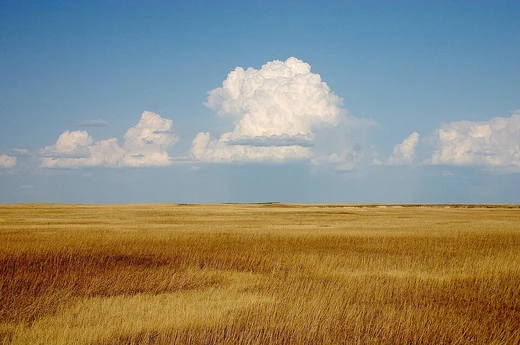
Kharga Oasis
Southernmost and largest of Egypt's western oases.

Wikipedia / Wikimedia Commons
Kharga Oasis is the southernmost of Egypt's five western oases, located in the Western Desert about 200 km west of the Nile valley. Known as the 'Southern Oasis' to the Ancient Egyptians, 'the outer' to the Greeks, and Oasis Magna to the Romans, it is the largest oasis in the Libyan Desert of Egypt. The oasis contains a major town of the same name, which serves as the capital of New Valley Governorate.
- location
- Western Desert, Egypt
- ancient names
- Southern Oasis (Egyptian), Exotero (Greek), Oasis Magna (Roman)
- modern name origin
- Arabic 'al-Ḫāriǧa' meaning 'the outer'
- climate
- Hot desert (Köppen BWh)
Lore & Background
Kharga Oasis has been a crossroads of caravan routes for millennia, most notably the Darb El Arba'īn ('Way of Forty'), a trade route connecting Middle Egypt to Sudan. The Romans built a chain of mud-brick fortresses along the route to protect it, ranging from small outposts to large settlements. He lived there for the rest of his life, surviving attacks by desert bandits, and composed the Bazaar of Heracleides, the only one of his writings to survive in full. The oasis contains numerous archaeological sites, including the Temple of Hibis, a Saite-era temple founded by Psamtik II around 500 BC, and the ancient Christian cemetery at El Bagawat, which functioned from the 3rd to the 7th century AD. In 1930, archaeologist Gertrude Caton–Thompson uncovered the palaeolithic history of Kharga.
Reader's Guide
Kharga Oasis holds significance as a historical hub of trans-Saharan trade and a site of cultural and religious convergence. The Darb El Arba'īn caravan route, described by Herodotus as a forty-day journey, linked Nubia and Egypt for centuries, and the Roman fortifications along it attest to the oasis's strategic importance. The exile of Nestorius to Kharga connects the oasis to early Christian theological history, as his writings there became foundational for Nestorian Christianity. Archaeologically, Kharga preserves evidence from prehistoric times through the Pharaonic, Persian, Greco-Roman, and Coptic periods. The Temple of Hibis and the cemetery at El Bagawat are among the best-preserved examples of their kinds.
Did You Know?
- The Darb El Arba'īn caravan route, passing through Kharga, was described by Herodotus as a road 'traversed…in forty days.'
- The Temple of Hibis, located about 2 km north of modern Kharga, was founded by Pharaoh Psamtik II around 500 BC.
More in Desert Landscapes 1-18
Spotted an error? Know more?
This is a living reference — every entry is fact-audited, and reader corrections feed straight into our audit queue. Suggest an edit · See this site's audit record