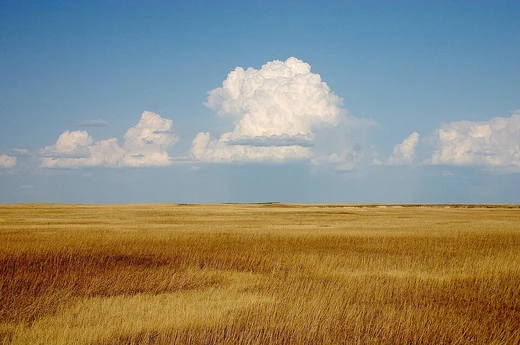
Rub' al Khali
Vast Arabian desert with ancient lakes and modern crossings.
The Rub' al Khali, also known as the Empty Quarter, is a vast desert covering most of the southern third of the Arabian Peninsula. Its extreme aridity and challenging terrain have made it a region of historical and scientific interest, with evidence of ancient lakes, human activity, and ongoing exploration.
- annual_precipitation
- less than 50 mm (2.0 in)
- classification
- hyper-arid
Lore & Background
The sand is reddish-orange due to feldspar. Brackish salt flats, such as Umm al Samim, exist on the eastern edge. Along the desert's middle length are raised areas of calcium carbonate, gypsum, marl, or clay that were once shallow lakes, which existed during periods from 6,000 to 5,000 years ago and 3,000 to 2,000 years ago. These lakes formed from cataclysmic rainfall and hosted flora and fauna, including hippopotamus, water buffalo, and long-horned cattle, as well as evidence of human activity such as chipped flint tools.
Reader's Guide
The Rub' al Khali holds significance as one of the world's largest sand deserts and a key part of the Arabian Desert ecoregion. Its hyper-arid climate and unique biodiversity, including arachnids, rodents, and the dromedary camel, have shaped the lives of local tribes such as the Al Murrah, Banu Yam, and Bani Yas. Modern exploration began with British explorers Bertram Thomas and St John Philby in the early 1930s, followed by Wilfred Thesiger's mapping in the 1940s and 1950s. Subsequent expeditions have included scientific surveys, on-foot crossings, and the discovery of fossilized creatures, meteorites, and new plant and bird species.
Did You Know?
- Ancient lakes existed in the Rub' al Khali during periods from 6,000 to 5,000 years ago and 3,000 to 2,000 years ago.
- The first documented journeys by non-resident explorers were made by British explorers Bertram Thomas and St John Philby in the early 1930s.
More in Desert Landscapes 1-18
Spotted an error? Know more?
This is a living reference — every entry is fact-audited, and reader corrections feed straight into our audit queue. Suggest an edit · See this site's audit record